
Managing your pet’s weight is essential for their long-term health and happiness. One of the biggest challenges pet owners face is choosing treats that won’t contribute to excess weight gain. Fortunately, there are plenty of low-calorie snacks for overweight pets that provide flavor, nutrition, and satisfaction without adding unnecessary calories. In this guide, you’ll discover healthy snack options, feeding tips, and smart ways to treat your pet responsibly.
Why Low-Calorie Snacks Matter
Overweight pets are at higher risk for health issues like heart disease, diabetes, joint pain, and reduced mobility. Treats often make up a large portion of hidden calories in a pet’s diet, so switching to healthy low-calorie pet snacks can make a major difference.
Benefits of Low-Calorie Snacks
• Supports weight control and healthier body condition
• Reduces risk of obesity-related diseases
• Helps maintain energy levels
• Keeps pets satisfied without overeating
• Encourages better eating habits and training sessions
Healthy Fresh Food Options for Low-Calorie Snacking
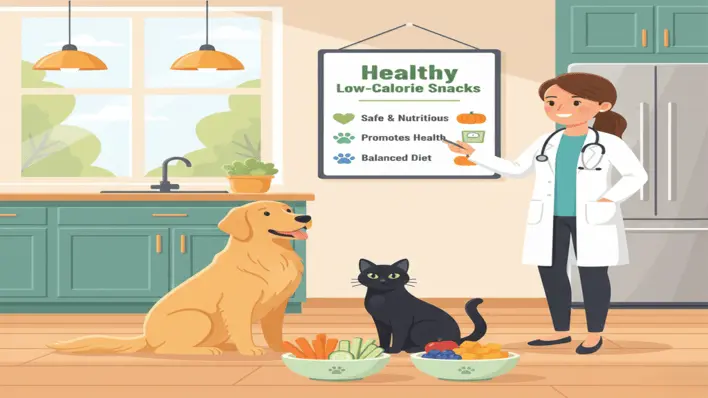
Fresh fruits and vegetables make excellent low-calorie snacks for pets, especially dogs. They are packed with vitamins and fiber, helping your pet feel full longer.
Safe Low-Calorie Fresh Snacks
• Carrot sticks
• Green beans
• Cucumber slices
• Apple slices (remove seeds)
• Banana pieces (in moderation)
• Blueberries
• Watermelon chunks (seedless)
These snacks are hydrating, crunchy, and satisfying. Always introduce new foods slowly to avoid digestive issues.
Vet-Recommended Commercial Low-Calorie Treats
Many brands offer low-calorie pet treats specifically designed for weight management. These snacks are formulated with fewer calories, added fiber, and healthy nutrients.
Look for Treats With
• Less than 5–10 calories per piece
• Natural ingredients
• High protein and low fat
• No artificial fillers or sugars
Commercial treats can be great when you need something easy and portion-controlled.
Use Freeze-Dried Protein Snacks
Freeze-dried meats are flavorful and nutrient-dense while still low in calories. They work well for both dogs and cats and are often used for training.
Low-Calorie Freeze-Dried Options
• Chicken breast pieces
• Turkey bites
• White fish treats
• Beef liver (in moderation)
These snacks offer pure protein without fillers, making them ideal for pets on diet plans.
Homemade Low-Calorie Pet Snack Ideas
Homemade treats are simple to make and give you full control over ingredients. Many recipes can be low-calorie, nutritious, and easily stored.
Easy Homemade Treat Ideas
• Baked sweet potato slices
• Frozen pumpkin cubes
• Spinach and chicken mini bites
• Oat and banana training treats
• Veggie puree frozen treats
Homemade snacks allow you to create healthy options your pet truly enjoys.
Portion Control Matters
Even low-calorie snacks can cause weight gain if you offer too many. Portion control ensures your pet stays within their daily calorie allowance.
Healthy Treat Guidelines
• Treats should make up no more than 10% of daily calories
• Break treats into smaller pieces for training
• Track treat calories just like meal calories
• Avoid free-feeding snacks throughout the day
Smaller portions help pets feel rewarded without overloading on calories.
Incorporate Low-Calorie Treats Into Training
Training sessions can involve lots of treats, so choosing low-calorie options is crucial. Small, soft treats work best for repetition-based training.
Training Treat Tips
• Use tiny treat pieces during training
• Mix in praise and petting with treat rewards
• Switch between treats and toy rewards
• Use high-value low-calorie treats for challenging tasks
This approach keeps training effective and healthy.
Avoid High-Calorie Snacks
Certain treats are surprisingly calorie-dense and should be avoided, especially for overweight pets.
Snacks to Avoid
• Cheesy treats
• Peanut butter-heavy snacks
• Fried or processed treats
• High-fat jerky
• Human snacks like chips, cookies, or cheese
These high-calorie items derail weight loss and can cause digestive problems.
Try Puzzle Feeders and Slow-Feed Treat Toys
Using interactive feeding toys makes snacks last longer and slows overeating. These tools turn snack time into mental stimulation, which helps reduce boredom and begging.
Benefits of Puzzle Feeders
• Promotes slower, mindful eating
• Keeps pets mentally engaged
• Provides exercise indoors
• Helps control portion sizes
Puzzle toys work great for overweight pets needing more activity and less snacking.
Consult Your Vet for Personalized Snack Advice
Every pet’s nutritional needs are different. If your pet is overweight, consult your veterinarian for personalized snack options and feeding guidelines.
When to Ask Your Vet
• If your pet has allergies
• If weight loss isn’t happening
• If your pet has health conditions
• If you’re unsure about safe foods
Vets can recommend tailored low-calorie snacks based on your pet’s age, weight, and dietary needs.
Final Thoughts
Choosing the right low-calorie snacks for overweight pets helps support healthier weight, better energy, and a longer life. By focusing on fresh produce, high-protein treats, portion control, and vet-approved options, you can reward your pet without compromising their diet. Remember — treats should be fun and nutritious, helping your furry friend feel their best every day.