
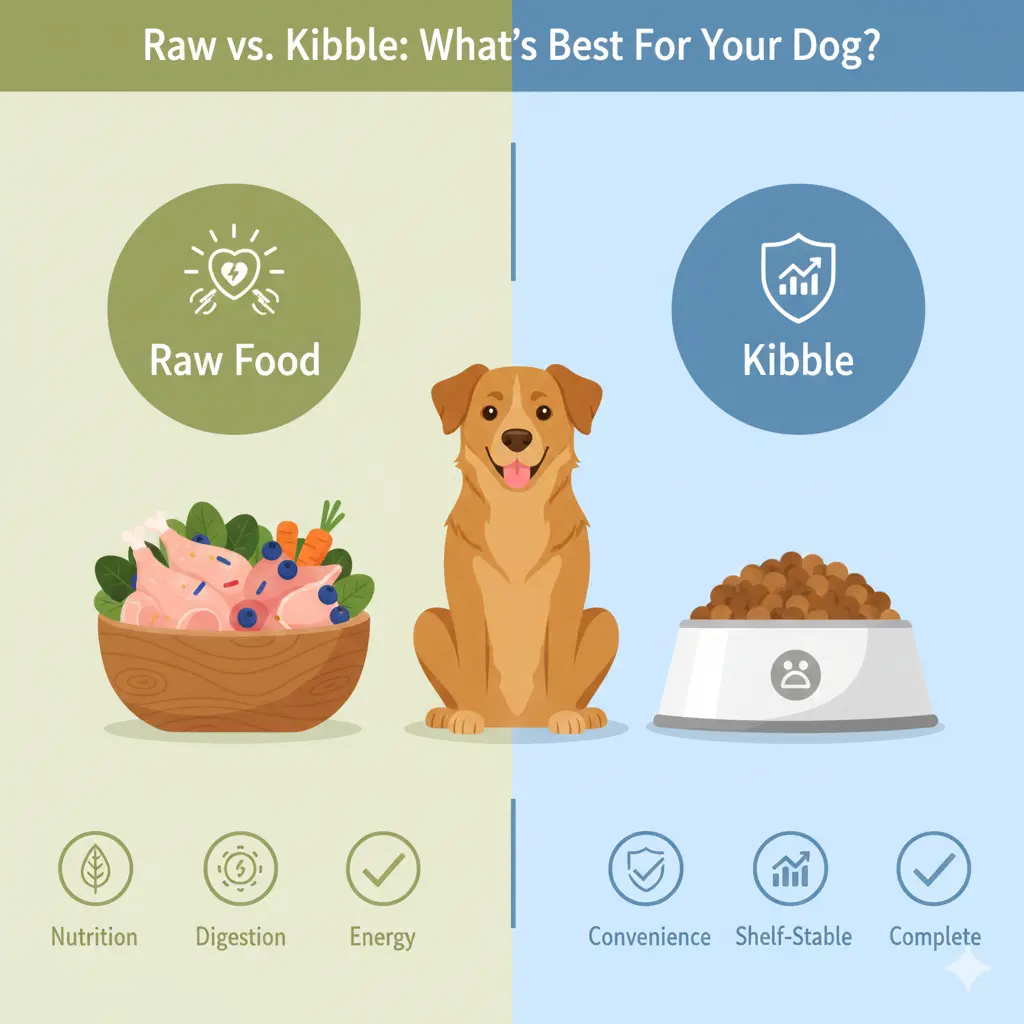
Choosing the right diet for your dog is one of the most important decisions you’ll make as a pet owner. With so many feeding options available, the debate between raw food diets and kibble diets has become more heated than ever. Some dog owners swear by raw feeding for its natural ingredients, while others prefer the convenience, safety, and nutritional consistency of kibble. So, raw vs. kibble—which diet is really better for your dog? This blog breaks down the pros, cons, and key factors to help you make an informed choice based on your dog’s needs.
Understanding the Raw Diet for Dogs
A raw dog diet usually includes uncooked meats, bones, organs, fruits, vegetables, and occasionally supplements. This feeding style is inspired by the ancestral diet of wild canines like wolves. Many pet owners believe raw feeding supports natural digestion, stronger immunity, and healthier skin and coat.
Benefits of a Raw Diet
Raw feeding has become popular because many dogs thrive on whole, natural foods. Owners often notice improvements in coat shine, reduced allergies, and better stool quality.
One major benefit is ingredient transparency. You know exactly what your dog is eating because you’re preparing it yourself or purchasing minimally processed raw meals. The diet typically avoids artificial additives, preservatives, and fillers.
Another advantage is improved dental health. Raw meaty bones can help reduce plaque buildup and keep teeth cleaner. Dogs that eat raw may also have increased energy, improved muscle tone, and fewer digestive issues.
Risks of a Raw Diet
Despite its benefits, raw feeding comes with risks. The biggest concern is bacterial contamination, such as Salmonella or E. coli, which can affect both dogs and humans handling the food. Improper storage or preparation increases these risks.
Raw diets can also be nutritionally unbalanced if not formulated properly. Dogs require specific ratios of protein, fat, vitamins, and minerals. Feeding too much bone can cause constipation, while too little calcium can lead to deficiencies.
Another challenge is cost and convenience. Raw diets are often more expensive and require freezer space, careful handling, and daily preparation time.
Understanding the Kibble Diet for Dogs
Kibble is the most common dog food worldwide. It’s made from processed ingredients such as meat meals, grains, vegetables, and added vitamins and minerals. Kibble is cooked at high temperatures and shaped into dry pellets.
Benefits of a Kibble Diet
Kibble is known for being convenient, affordable, and nutritionally balanced. Commercial dog foods undergo strict testing and quality control to ensure they meet established nutritional standards.
Dry food is also easy to store and serve, making it ideal for busy households. Most kibble contains added vitamins, minerals, and essential nutrients that support long-term health.
Another benefit is safety. Because kibble is cooked at high temperatures, harmful bacteria are usually eliminated during manufacturing. This reduces contamination risk compared to raw food.
Risks of a Kibble Diet
While kibble is convenient, it has its downsides. Highly processed foods can lose natural nutrients during cooking. Some lower-quality kibble brands include fillers, artificial colors, and preservatives.
Kibble can also be harder for some dogs to digest, especially those with sensitivities. Dogs prone to allergies may react to grains or plant-based proteins commonly found in kibble formulas.
Dental health is another issue. Although many believe kibble cleans teeth, it does not always prevent plaque buildup. Some dogs may also gain weight easily on kibble if owners aren’t careful with portion sizes.
Raw vs Kibble Comparing Key Factors
Nutrition and Ingredients
Raw diets offer whole, natural ingredients without heavy processing. Dogs with allergies or sensitivities often do well on raw because the ingredient list is clean and simple.
Kibble, however, is formulated to provide complete and balanced nutrition. Premium kibble brands use high-quality meats, limited fillers, and scientifically backed nutrients. If you choose kibble, selecting a reputable brand is important.
Safety and Sanitation
Raw diets carry higher bacterial risks. Handling raw meat requires cleaning surfaces, washing hands, and storing food properly.
Kibble is safer and less risky in terms of contamination. That said, some kibble brands have experienced recalls due to mold or storage issues.
Cost
Raw diets tend to be more expensive due to the quality of ingredients. Premium cuts, bones, and supplements can increase monthly costs.
Kibble is generally more budget-friendly and available in various price ranges, making it accessible for all dog owners.
Convenience
Raw feeding requires planning, thawing, and cleaning. It’s not ideal for busy lifestyles or travel unless pre-made raw meals are used.
Kibble is extremely convenient—just scoop and serve. It stores easily and travels well.
Digestive Health
Some dogs digest raw food more efficiently because it aligns with their natural biology. Raw diets often reduce gas, bloating, and stool volume.
Kibble works well for many dogs too, especially formulas made for sensitive stomachs. High-quality kibble with easily digestible ingredients can support gut health.
How to Decide Which Diet Is Best for Your Dog
Choosing between raw and kibble depends on your dog’s breed, age, health condition, lifestyle, and your budget. There is no universal answer—the best diet is the one that keeps your dog healthy, energetic, and thriving.
Consider Your Dog’s Health Needs
Dogs with food sensitivities may benefit from raw or limited-ingredient kibble. Senior dogs may need diets tailored for joint health or easy digestion.
If your dog has medical conditions, always consult your veterinarian before switching diets.
Consider Your Lifestyle
Raw feeding requires time and resources. If you can commit to safe preparation and storage, it can be rewarding. For busy households, kibble offers a reliable and efficient solution.
Consider a Hybrid Diet
Many owners choose a mixed feeding approach, combining kibble with raw toppers, cooked meats, or freeze-dried raw pieces. This can offer the nutritional benefits of raw with the convenience of kibble.
Final Thoughts Raw vs Kibble Which Is Better?
Both raw diets and kibble diets have strengths and challenges. Raw feeding offers natural ingredients and potential health benefits, while kibble provides convenience, safety, and balanced nutrition. The right diet depends on your dog’s individual needs and your ability to maintain the feeding plan responsibly.
Whether you choose raw, kibble, or a mixed approach, the goal is the same—to keep your dog healthy, happy, and thriving. Always introduce new diets gradually and consult your veterinarian for personalized guidance.