

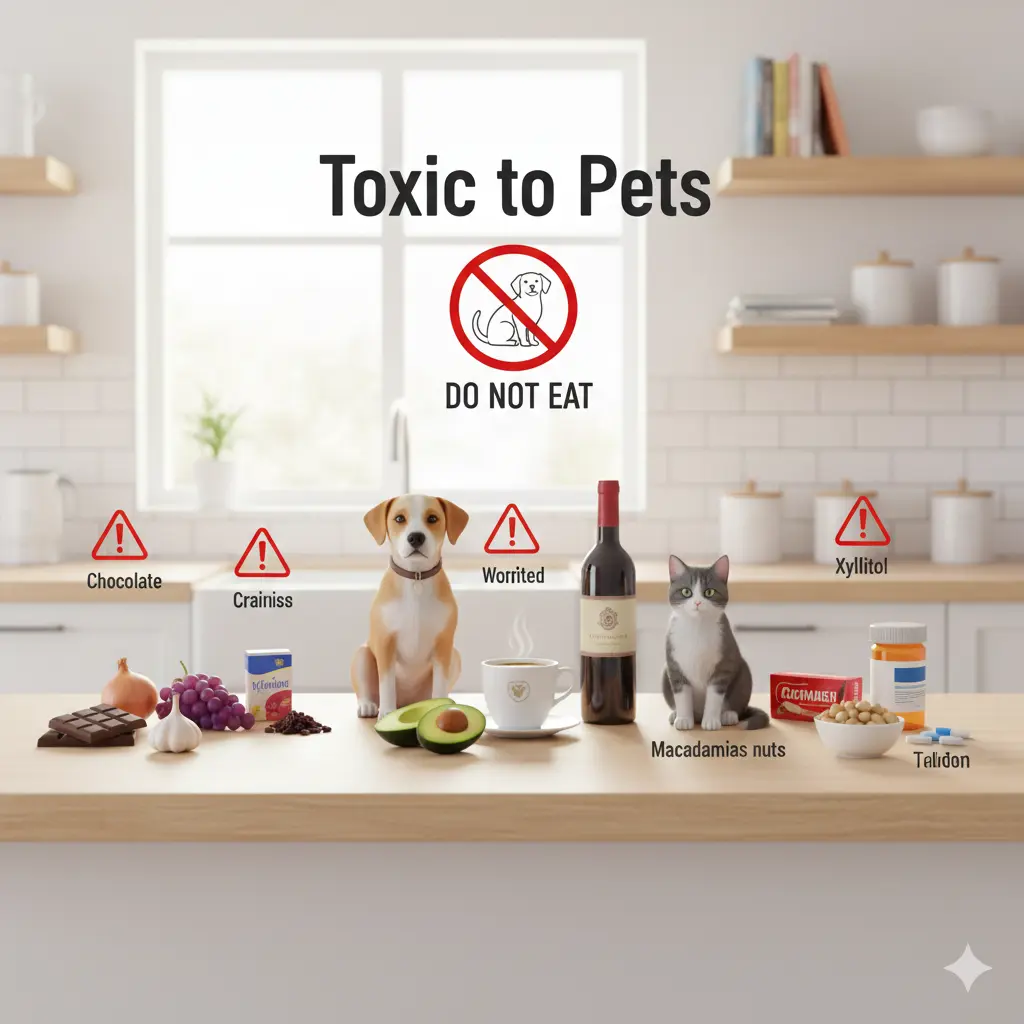
Keeping your pets healthy means more than providing love, exercise, and regular vet visits. One of the most important responsibilities for pet owners is understanding which everyday foods can harm their furry companions. Many items that are safe for humans can be dangerous, even deadly, for dogs, cats, and other household pets. In this guide, we’ll explore the common foods that are toxic to pets, the symptoms of poisoning, and how to keep your animals safe.
Why Understanding Toxic Foods for Pets Matters
Pets are naturally curious. Whether your dog steals food from the counter or your cat licks leftovers from a plate, accidents can happen quickly. Knowing which foods are dangerous can help prevent emergencies. Some foods cause mild digestive upset, while others can lead to severe pet poisoning, organ failure, or even death. Awareness is the first step toward prevention.
Toxic Foods Every Pet Owner Should Avoid
Chocolate
Chocolate is one of the most well-known toxic foods for pets, especially dogs. It contains theobromine and caffeine, which pets cannot metabolize properly. Dark chocolate and baking chocolate contain the highest concentration of these harmful substances.
Symptoms: Vomiting, diarrhea, rapid breathing, tremors, seizures.
Grapes and Raisins
Even in small amounts, grapes and raisins can cause sudden kidney failure in dogs. The exact toxin is still unknown, but veterinarians agree that these fruits should be strictly avoided.
Symptoms: Vomiting, lethargy, loss of appetite, decreased urination.
Onions and Garlic
Onions, garlic, leeks, and chives—whether cooked, raw, powdered, or dehydrated—are all dangerous for pets. These foods damage red blood cells, leading to anemia.
Symptoms: Weakness, pale gums, increased heart rate, collapse.
Alcohol
Even tiny amounts of alcohol can be extremely dangerous to pets. It affects their central nervous system more quickly than in humans, leading to severe poisoning.
Symptoms: Vomiting, difficulty breathing, coordination problems, coma.
Xylitol
Xylitol is a sugar substitute found in sugar-free gum, candy, baked goods, peanut butter, and even certain vitamins. For pets, especially dogs, xylitol poisoning can occur within minutes.
Symptoms: Rapid drop in blood sugar, vomiting, seizures, liver failure.
Caffeine
Caffeine is found in coffee, tea, soda, and energy drinks. Pets are far more sensitive to caffeine poisoning than humans, and ingestion can be life-threatening.
Symptoms: Hyperactivity, elevated heart rate, tremors, seizures.
Macadamia Nuts
Macadamia nuts are highly toxic to dogs. While they rarely cause death, they can lead to serious discomfort and temporary paralysis.
Symptoms: Vomiting, hind-leg weakness, tremors, fever.
Avocado
Avocados contain persin, a toxin that can harm dogs, birds, rabbits, and livestock. While cats and dogs are less sensitive than birds, ingestion still poses risks.
Symptoms: Vomiting, diarrhea, breathing difficulties (especially in birds).
Raw Dough
Unbaked yeast dough expands in a pet’s stomach, causing dangerous bloating. The fermentation process also creates alcohol, which leads to additional toxicity.
Symptoms: Swelling of the abdomen, vomiting, disorientation.
Salt and Salty Snacks
Excessive salt intake can cause serious health problems in pets. Foods like chips, pretzels, and salted meats may lead to sodium ion poisoning.
Symptoms: Vomiting, diarrhea, tremors, seizures.
Fatty Foods
Foods high in fat—such as bacon, fried foods, and leftover table scraps—can trigger pancreatitis, a painful and potentially life-threatening condition for dogs.
Symptoms: Abdominal pain, vomiting, loss of appetite, fever.
Foods That Are More Dangerous for Cats
Cats metabolize certain foods differently than dogs. In addition to the list above, cat owners should be cautious of:
Dairy Products
Many cats are lactose intolerant, and dairy can cause digestive upset.
Tuna (Excessive Amounts)
Too much tuna leads to mercury poisoning and unbalanced nutrition.
Raw Fish
Contains enzymes that destroy essential vitamins and can lead to deficiencies.
What To Do if Your Pet Eats Something Toxic
If you suspect your pet has consumed a toxic food:
1. Call Your Veterinarian Immediately
Provide details about the food, amount eaten, and symptoms.
2. Contact an Emergency Pet Poison Helpline
Organizations like the ASPCA Poison Control Center can offer immediate advice.
3. Do NOT Induce Vomiting Unless Directed
Some toxins are more harmful when vomited back up.
4. Watch for Symptoms
Rapid response increases the chances of a full recovery.
How To Keep Your Pets Safe at Home
Pet-proofing your home is essential to prevent accidental ingestion. Use the following tips:
Store Food Out of Reach
Keep bags, boxes, and leftovers in sealed containers or cabinets.
Avoid Feeding Table Scraps
Train your pets not to beg for food from your plate.
Educate Family Members
Make sure children and visitors know which foods are unsafe.
Use Pet-Safe Treat Alternatives
Choose vet-approved snacks instead of human food.
Final Thoughts on Foods Toxic to Pets
Understanding the common foods that are toxic to pets is essential for keeping your animals safe and healthy. While it’s tempting to share your favorite snacks with your furry friend, many human foods can pose serious risks. By staying informed and being proactive about food safety, you can prevent emergencies and ensure your pets enjoy long, happy lives.