

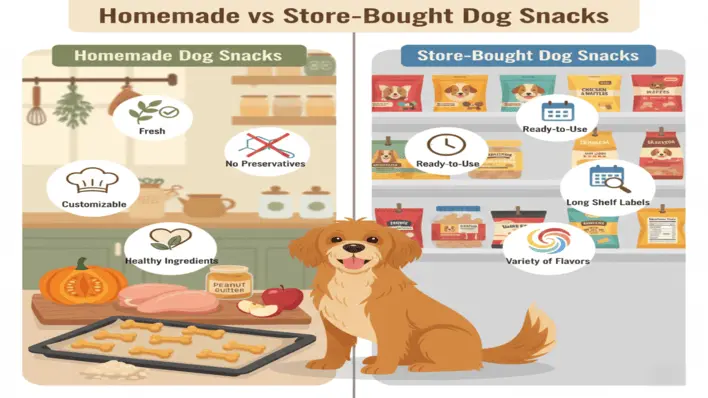
Choosing the right treats for your furry friend is an important part of dog care. With so many options available, many dog owners wonder whether homemade dog snacks or store-bought dog snacks are the better choice. Both have advantages and drawbacks, and understanding these differences can help you make healthier, safer decisions for your pup. This guide breaks down everything you need to know when comparing homemade vs store-bought dog snacks—from ingredients and nutrition to cost, convenience, and safety.
Understanding the Difference Between Homemade and Store-Bought Dog Snacks
Dog snacks serve multiple purposes: training rewards, dental care, enrichment, or simply showing affection. But the quality of the treats matters. The main difference between homemade dog snacks and store-bought dog snacks lies in control, nutrition, cost, and preparation.
Homemade treats give you complete control over what your dog eats, while commercial treats offer convenience and consistency. Knowing the pros and cons helps you select what’s best for your dog’s health and your lifestyle.
Benefits of Homemade Dog Snacks
Full Control Over Ingredients
One of the biggest advantages of homemade treats is knowing exactly what goes into them. You can choose natural, whole-food ingredients and avoid artificial additives, preservatives, and fillers commonly found in some commercial treats.
Customizable for Special Diets
If your dog has allergies or sensitivities, homemade snacks allow you to tailor recipes using safe ingredients. You can make grain-free, dairy-free, low-calorie, or high-protein treats easily.
Freshness and Quality
Homemade treats are made fresh, which means you control their shelf life. Many dogs love the taste and smell of freshly baked snacks, making them perfect for picky eaters.
Cost-Effective
Homemade treats can be more affordable, especially when using everyday ingredients like peanut butter, oats, pumpkin, or sweet potatoes.
Drawbacks of Homemade Dog Snacks
Short Shelf Life
Since homemade treats lack preservatives, they don’t last as long. They may require refrigeration or freezing to stay fresh.
Time and Effort Required
Not all dog owners have the time to bake or prepare snacks regularly. Recipes require measuring, baking, and storage.
Potential for Nutritional Imbalance
Without proper knowledge, it’s easy to create treats that are too high in fat, sugar, or calories. Dogs need balanced nutrition, even in snacks, so recipes must be chosen carefully.
Benefits of Store-Bought Dog Snacks
Convenient and Quick
Store-bought dog snacks are readily available and ideal for busy owners. They require no preparation—just open the bag and serve.
Wide Variety of Options
From dental chews to high-protein jerky, training treats, and grain-free options, the variety is huge. You can choose snacks based on breed, size, age, or dietary needs.
Long Shelf Life
Commercial treats often last months due to preservatives, making them great for long-term storage and travel.
Formulated by Experts
Many reputable brands design snacks with vets and nutritionists, ensuring they meet safety and nutritional standards.
Drawbacks of Store-Bought Dog Snacks
Possible Artificial Ingredients
Some brands use additives, artificial flavors, dyes, and preservatives. Not all are harmful, but some can irritate sensitive dogs.
Higher Costs
Premium dog snacks—especially organic or single-ingredient options—can be expensive.
Hard to Verify Quality
Labels don’t always reveal everything. Some lower-quality products may include unspecified meat byproducts or fillers.
Comparing Homemade vs Store-Bought Dog Snacks
Ingredients
- Homemade: You choose everything. No hidden ingredients.
- Store-Bought: Quality varies widely depending on brand.
Nutrition
- Homemade: Can be highly nutritious if recipes are balanced.
- Store-Bought: Formulated to be consistent but sometimes contain excess calories or additives.
Cost
- Homemade: Usually cheaper, especially in bulk.
- Store-Bought: Can get expensive, especially with premium brands.
Convenience
- Homemade: Requires time and effort.
- Store-Bought: Fast and easy—ideal for training and travel.
Safety
- Homemade: Safe if you use dog-friendly ingredients.
- Store-Bought: Regulated, but recalls do happen—brand choice matters.
Which Is Better Homemade or Store-Bought?
The best option depends on your dog’s needs and your lifestyle.
Choose Homemade Dog Snacks If
- Your dog has allergies
- You prefer natural or organic ingredients
- You enjoy baking or DIY projects
- You want budget-friendly treats
Choose Store-Bought Dog Snacks If
- You want convenience
- You travel often
- You need long-lasting training treats
- You prefer vet-formulated or specialized snacks
Many dog owners choose a combination of both—homemade treats for special occasions and bonding, and store-bought treats for training or on-the-go moments.
Tips for Choosing the Best Dog Snacks
When Making Homemade Snacks
- Use vet-approved ingredients
- Avoid sugar, salt, and spices
- Store treats properly to prevent spoilage
- Follow tested recipes
When Buying Store-Bought Snacks
- Read ingredient labels carefully
- Choose treats with real meat or whole foods
- Avoid artificial colors and preservatives
- Pick snacks appropriate for your dog’s age and size
Final Thoughts
When comparing homemade vs store-bought dog snacks, there’s no one-size-fits-all answer. Both options have unique benefits for your dog’s health, safety, and enjoyment. Homemade treats offer control and freshness, while store-bought snacks offer convenience and variety. By balancing both, you can keep your dog healthy, happy, and excited for treat time.