
Crate training is one of the most effective methods for housebreaking dogs and providing them with a safe, comfortable space. When done correctly, it helps build trust, security, and good behavior. However, mistakes can make the experience stressful for your dog. Here’s a guide to the essential do’s and don’ts of crate training.
Do: Introduce the Crate Gradually
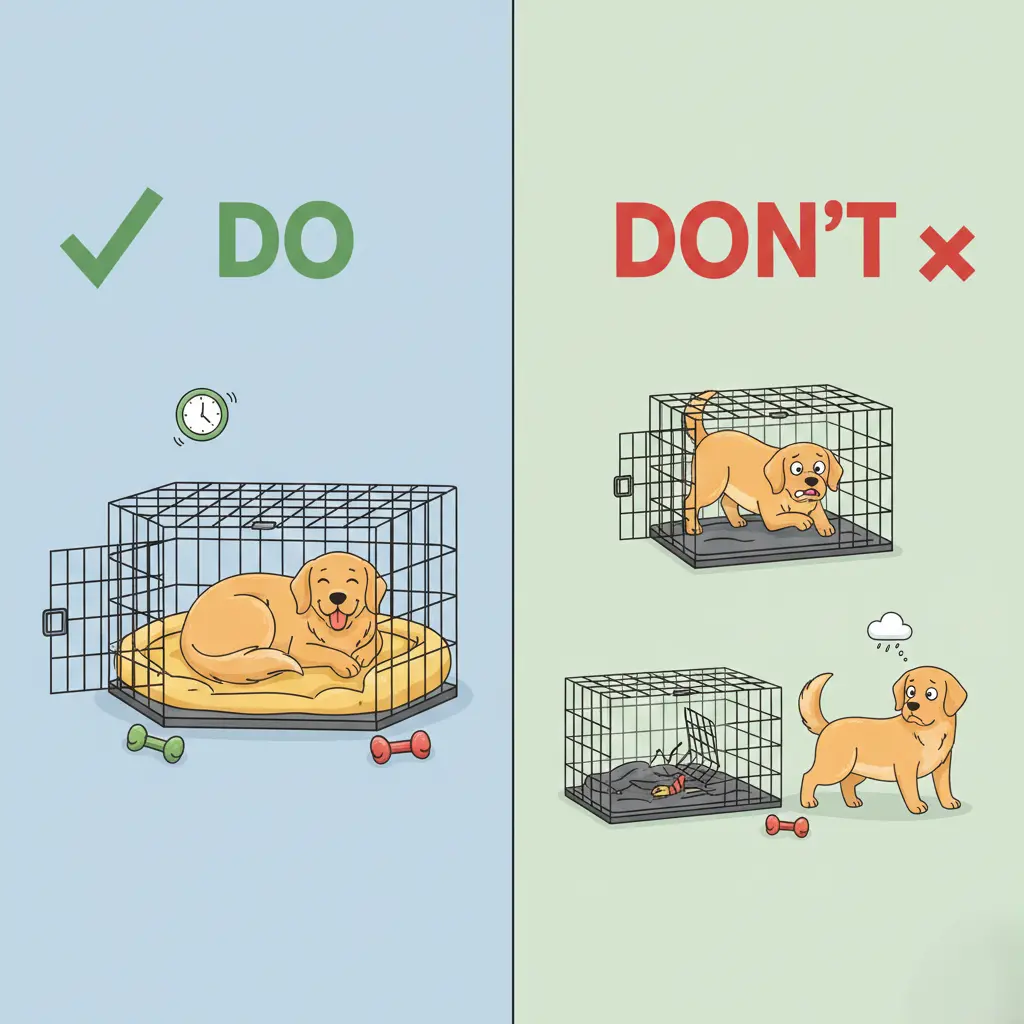
Start by making the crate a positive space. Place treats, toys, or a soft blanket inside and allow your dog to explore at their own pace. Encourage them to enter on their own, and never force them in. Gradual introduction helps your dog associate the crate with safety and comfort.
Do: Keep Training Sessions Short
Begin with short periods in the crate, just a few minutes at a time, and gradually increase the duration. This prevents anxiety and ensures your dog remains relaxed. Always reward calm behavior with praise or treats when they enter or stay in the crate.
Do: Use the Crate for Rest, Not Punishment
A crate should be a safe haven, not a place for punishment. Using the crate as a timeout can create negative associations and make your dog fearful. Instead, think of it as a cozy retreat where your dog can relax and feel secure.
Don’t: Leave Your Dog in the Crate Too Long
Avoid leaving your dog in the crate for extended periods, especially puppies. Too much time can lead to boredom, stress, and behavioral issues. Puppies generally shouldn’t be crated for more hours than their age in months plus one.
Don’t: Use the Crate to Avoid Training
Crate training is a tool, not a substitute for proper training. Continue teaching basic commands, housebreaking, and socialization outside of the crate. Neglecting these aspects can limit your dog’s overall development and behavior.
Do: Make Exits and Entries Calm
Encourage calm behavior when your dog enters or exits the crate. Avoid making a big fuss, which can create excitement or anxiety. A calm routine reinforces the crate as a normal, comfortable part of daily life.
Final Thoughts
Crate training can be highly beneficial when done correctly. By following these do’s and don’ts, you provide your dog with a safe space, support proper behavior, and strengthen your bond. Remember, patience, consistency, and positive reinforcement are key to successful crate training.