

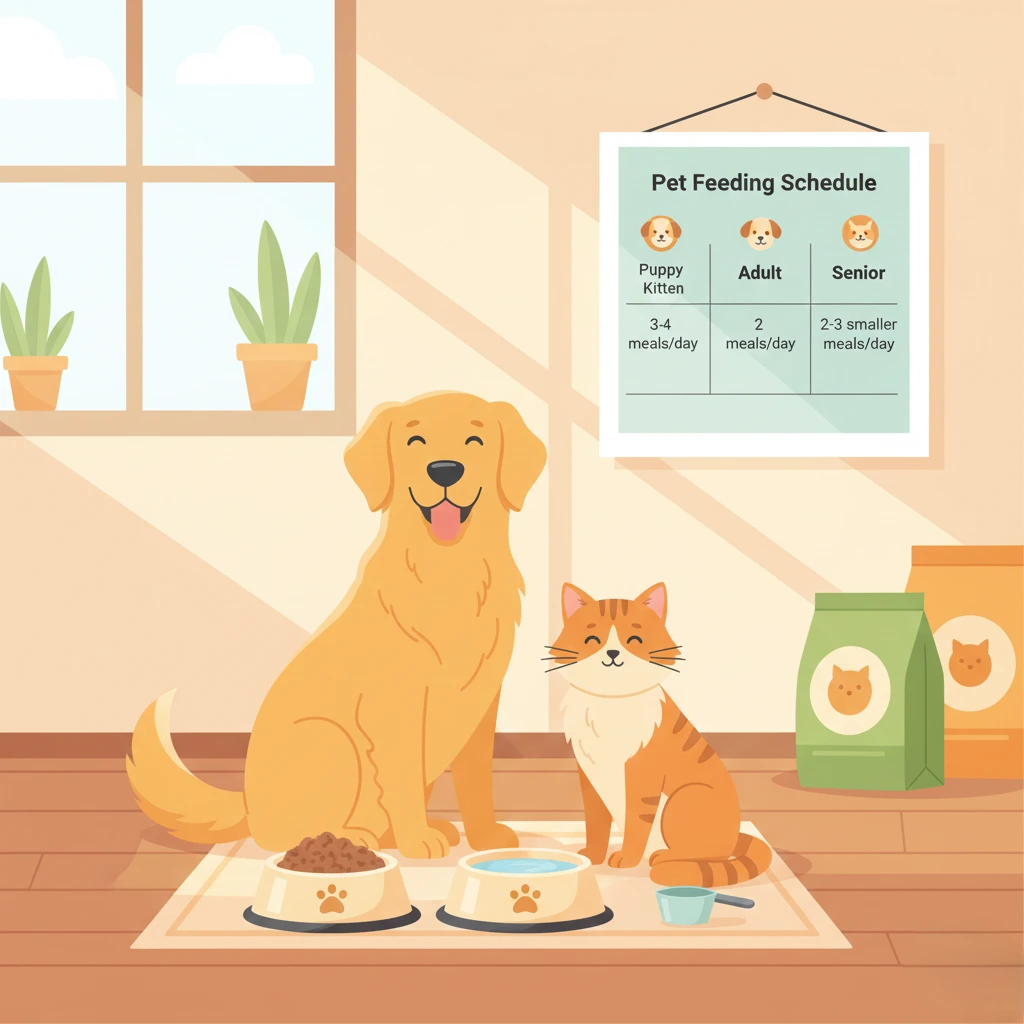
Feeding your pet the right amount at the right time is essential for their health, energy, and long-term wellbeing. The ideal feeding schedule depends on several key factors:
🐾 Type of Pet
- Dogs and cats have different nutritional needs.
- Small animals (like hamsters or rabbits) often need access to food more frequently, especially hay for rabbits.
📅 Age
- Puppies and kittens: Need more frequent meals (usually 3–4 times a day) to support growth.
- Adult pets: Typically do well with 1–2 meals per day.
- Senior pets: May benefit from smaller, more frequent meals to aid digestion.
⚖️ Size and Breed
- Smaller breeds often have faster metabolisms, requiring regular meals.
- Larger breeds may eat less often, but portions are usually bigger.
🏃 Activity Level
- Active pets need more calories and sometimes extra meals.
- Less active pets may need controlled portions to prevent weight gain.
🩺 Health Needs
- Pets with medical conditions (like diabetes or stomach sensitivity) may need special feeding schedules.
- Always follow advice from a veterinarian if your pet has health concerns.
⏰ Consistency Matters
- Feeding at the same times each day helps with digestion, behavior, and training.
✅ Quick Tips
- Measure portions to avoid overfeeding.
- Provide fresh water at all times.
- Monitor your pet’s weight and energy levels.
If you want, tell me what kind of pet and their age, and I can suggest a more specific feeding schedule 🐶🐱