
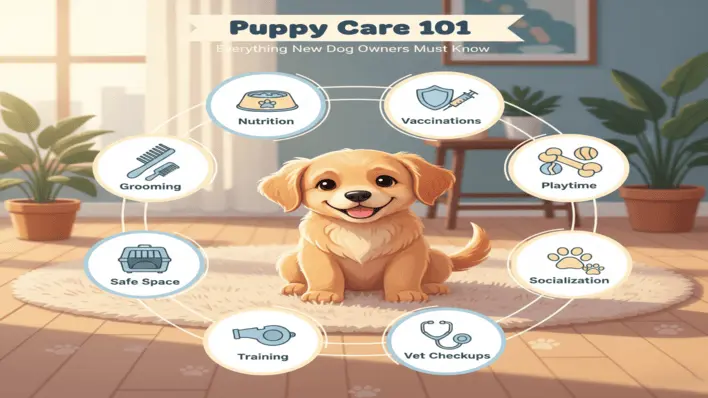
Bringing home a new puppy is exciting, heartwarming, and a little overwhelming. Puppies are adorable, but they also require time, training, patience, and consistency. Whether you’re a first-time dog owner or welcoming a new furry family member, understanding puppy care basics is essential for raising a healthy, happy dog. This guide covers everything new dog owners must know—from nutrition and grooming to training and safety.
Preparing Your Home for a Puppy
Before your puppy arrives, make sure your home is safe, welcoming, and ready.
Puppy-Proof the Space
- Remove electrical cords or cover them
- Keep cleaning supplies out of reach
- Block off unsafe areas
- Put away shoes, wires, and small objects puppies can chew
Creating a safe environment helps prevent injuries and reduces stress for both you and your puppy.
Create a Comfortable Puppy Area
Your puppy needs a designated space to rest and adjust. Include:
- A cozy bed
- Food and water bowls
- Chew toys
- A crate or playpen
A dedicated area helps your puppy feel secure and speeds up the house-training process.
Choosing the Right Puppy Supplies
Having the right tools makes puppy care easier and more effective.
Essential Puppy Supplies
- Leash and collar
- Puppy food
- Training treats
- Crate and bedding
- Grooming tools (brush, shampoo, nail clippers)
- ID tag and microchip
These items help build routine and set the foundation for good behavior from day one.
Feeding Your Puppy Properly
Nutrition is one of the most important parts of puppy care.
Select the Right Puppy Food
Puppies grow fast and need food formulated specifically for their development. Look for:
- High protein content
- Balanced nutrients
- High-quality ingredients
- Foods approved by veterinarians or trusted pet brands
Never feed adult dog food to puppies; it lacks essential nutrients they need during growth.
Create a Feeding Schedule
Puppies thrive on routine. Feed them:
- 3–4 small meals per day (for younger puppies)
- At the same times daily
- With access to clean water at all times
Avoid feeding human food, especially chocolate, onions, garlic, and grapes—they are toxic.
House-Training Your Puppy
House-training takes time, patience, and consistency, but every puppy can learn.
Use a Crate
Crate training is one of the fastest and most effective ways to house-train. Puppies do not like to soil where they sleep, making crates helpful for learning bathroom habits.
Set a Potty Routine
Take your puppy outside:
- First thing in the morning
- After meals
- After naps
- Before bedtime
- Every 2–3 hours
Praise and reward your pup immediately when they go outside to encourage good behavior.
Socialization and Early Training
Training should begin as soon as your puppy comes home. Early experiences shape their lifelong behavior.
Socialization Basics
Expose your puppy to different:
- People
- Sounds
- Environments
- Animals
Positive socialization helps prevent fear, aggression, and anxiety later in life.
Basic Commands to Teach
Start with simple commands:
- Sit
- Stay
- Come
- Down
- Leave it
Use positive reinforcement: treats, praise, and affection work better than punishment.
Grooming and Hygiene for Puppies
Grooming keeps your puppy clean and healthy.
Regular Grooming Tasks
- Brush the coat weekly
- Trim nails every 2–3 weeks
- Brush teeth daily or every other day
- Bathe your puppy every 2–4 weeks (depending on breed)
Introducing grooming early helps your puppy become comfortable and reduces stress over time.
Vet Visits and Vaccinations
Regular veterinary care is essential for healthy puppy development.
First Vet Check
Schedule your first vet visit within the first week. The vet will:
- Perform a physical exam
- Discuss vaccines
- Check for parasites
- Offer feeding and training advice
Vaccination Schedule
Common puppy vaccines include:
- Distemper
- Parvovirus
- Hepatitis
- Rabies
Follow your veterinarian’s recommended schedule to keep your puppy protected.
Exercise and Playtime
Puppies need both physical and mental stimulation.
Daily Activity
- 10–20 minutes of gentle play for young puppies
- Short walks
- Puzzle toys
- Safe chew toys
Avoid overly intense exercise, as puppies’ bones and joints are still developing.
Puppy Behavior and Teething
Chewing, biting, and mischief are normal parts of puppyhood.
How to Manage Teething
- Offer safe chew toys
- Use frozen treats to soothe gums
- Redirect chewing from furniture to toys
Never punish your puppy for chewing; instead, teach them what is allowed.
Handling Puppy Biting
If your puppy nips:
- Say “No” or “Ouch” calmly
- Redirect to a toy
- Praise when they bite toys instead of hands
Consistency teaches proper bite inhibition.
Building Routine and Structure
Puppies thrive on consistency. Create routines for:
- Feeding
- Potty breaks
- Training
- Playtime
- Sleep
A structured schedule reduces anxiety and speeds up learning.
Final Thoughts
Puppy Care 101 is all about patience, consistency, and love. Raising a puppy takes time, but the rewards are lifelong. With the right training, nourishment, grooming, and environment, your puppy grows into a well-behaved, healthy, and happy dog. Every new dog owner should focus on creating routines, socializing early, and building positive habits from the start.