
Bringing a new puppy into your home is exciting, but it also comes with the responsibility of teaching them proper behavior. Puppy Training 101: Basic Commands is designed to guide new pet owners through the essential steps needed to establish good habits early. With the right approach, you can build a strong bond with your puppy while teaching them obedience, manners, and essential dog commands.
Why Puppy Training is Important
Training your puppy is more than just teaching tricks—it sets the foundation for a well-behaved adult dog. Puppies are naturally curious and energetic, and without guidance, they can develop unwanted habits such as biting, excessive barking, or chewing furniture. Understanding how to train a puppy effectively ensures they grow into confident, obedient dogs who respond to your commands consistently.
Benefits of Early Training
- Builds trust and communication between you and your puppy
- Helps prevent behavioral issues
- Makes vet visits, walks, and socialization easier
- Provides mental stimulation for your puppy
Starting with Puppy Training 101: Basic Commands helps you address these areas before problems escalate.
Essential Dog Commands Every Puppy Should Learn
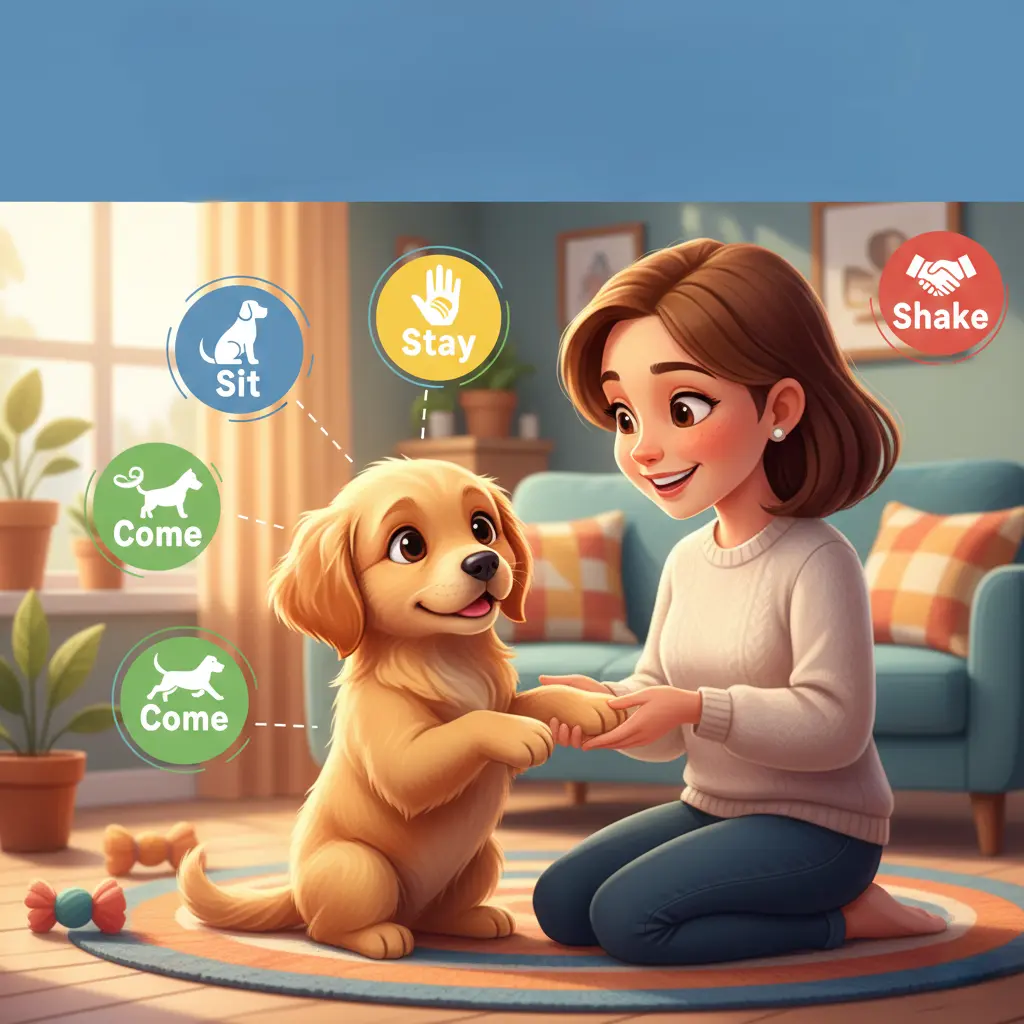
One of the first steps in Puppy Training 101: Basic Commands is teaching your puppy fundamental dog commands. These commands create a framework for more advanced training and improve overall safety.
Sit
Teaching your puppy to sit is often the easiest and most effective starting point. Use a treat to lure them into a sitting position while saying “sit” clearly. Praise them immediately when they comply. Consistent practice will make this one of the first dog commands they master.
Stay
The “stay” command teaches patience and self-control. Start by asking your puppy to sit, then hold your hand out and say “stay.” Gradually increase the distance and duration while offering praise or treats for compliance. Learning how to train a puppy to stay is crucial for safety in situations like crossing streets or meeting other animals.
Come
The “come” command ensures your puppy responds to your call, no matter the distractions. Start in a quiet space, call your puppy’s name followed by “come,” and reward them when they approach. Mastering this is one of the most important dog commands for safety and bonding.
Leave It
Teaching your puppy to “leave it” prevents them from picking up harmful objects. Place a treat on the floor and cover it with your hand while saying “leave it.” Reward the puppy when they stop trying to get the treat and look at you instead. This command is essential in Puppy Training 101: Basic Commands to avoid accidents.
Tips for Effective Puppy Training
Use Positive Reinforcement
Reward-based training is the most effective approach. Use treats, praise, and affection to reinforce good behavior rather than punishment. Puppies learn best when training is fun and rewarding.
Keep Training Sessions Short
Puppies have short attention spans, so sessions should last 5–10 minutes several times a day. Short, consistent sessions help your puppy retain what they learn without becoming frustrated.
Be Patient and Consistent
Consistency is key in Puppy Training 101: Basic Commands. Use the same words, gestures, and rewards each time you train. Patience ensures your puppy understands what is expected, making how to train a puppy less stressful for both of you.
Socialize Your Puppy
Introduce your puppy to different people, animals, and environments early. Socialization improves behavior and helps your puppy learn appropriate interactions, which complements basic dog commands training.
Common Mistakes to Avoid
- Inconsistent commands or rewards
- Training when the puppy is overly tired or distracted
- Using punishment instead of positive reinforcement
- Expecting instant results
Avoiding these mistakes increases the effectiveness of Puppy Training 101: Basic Commands and ensures your puppy learns faster.
Conclusion
Training your puppy is a rewarding experience that strengthens your relationship and sets the stage for a lifetime of good behavior. By following Puppy Training 101: Basic Commands, teaching essential dog commands, and understanding how to train a puppy properly, you can create a happy, obedient, and confident companion. Remember, patience, consistency, and positive reinforcement are the keys to success, and starting early makes all the difference. Your efforts today will pay off in a well-behaved dog tomorrow.