

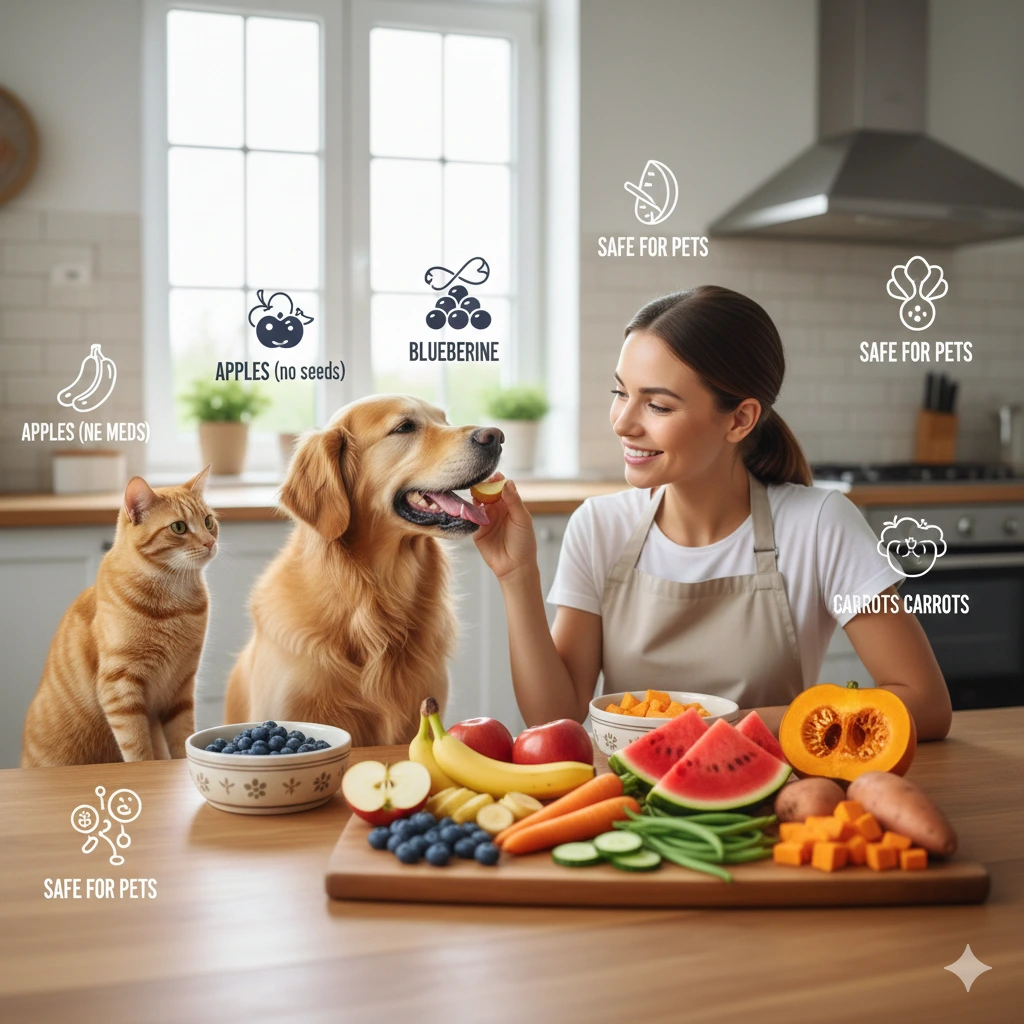
Providing your pets with healthy snacks is an important part of maintaining their overall well-being. While commercial pet treats are convenient, incorporating safe fruits and vegetables into their diet can boost nutrition, provide essential vitamins, and offer a tasty alternative to processed snacks. Understanding which fruits and vegetables are safe for cats and dogs ensures that you are giving your pets delicious treats without risking their health.
Why Fruits and Vegetables Are Good for Pets
Fruits and vegetables are naturally rich in vitamins, minerals, antioxidants, and fiber, which can support your pet’s:
- Digestive health
- Immune system
- Weight management
- Dental hygiene
Unlike sugary or fatty processed treats, fresh produce provides natural nutrition and can help reduce obesity and promote overall wellness.
1. Fruits Pets Can Safely Eat
Many fruits are suitable for pets when given in moderation. They provide essential vitamins and act as refreshing snacks.
Safe Fruits for Dogs and Cats
- Apples – Rich in vitamins A and C; remove seeds and core
- Blueberries – Antioxidant-rich and low-calorie
- Bananas – Provide potassium and fiber; serve in small pieces
- Strawberries – Vitamin C boost and natural sweetness
- Watermelon – Hydrating and low in calories; remove seeds and rind
- Pears – Fiber-rich; remove seeds and core before serving
Fruits should be given as occasional treats rather than replacing a balanced diet.
2. Vegetables Pets Can Safely Eat
Vegetables are great sources of fiber, vitamins, and minerals. Many can be served raw, steamed, or lightly cooked.
Safe Vegetables for Dogs and Cats
- Carrots – Crunchy, low-calorie, and great for dental health
- Green beans – High in fiber and vitamins; serve cooked or raw
- Cucumber – Hydrating and low in calories
- Peas – Rich in vitamins and protein
- Sweet potatoes – Provide beta-carotene; cook thoroughly before serving
- Pumpkin – Excellent for digestion; serve cooked or pureed
Introduce vegetables gradually to avoid digestive upset and monitor your pet for any reactions.
3. How to Prepare Fruits and Vegetables Safely
Even safe fruits and vegetables can be harmful if served incorrectly. Proper preparation ensures safety and digestibility.
Tips for Safe Preparation
- Wash thoroughly to remove pesticides
- Cut into bite-sized pieces to prevent choking
- Remove seeds, pits, and stems from fruits
- Serve raw or lightly steamed for easier digestion
- Avoid adding salt, sugar, or spices
Careful preparation makes healthy snacks enjoyable and safe for your pets.
4. Fruits and Vegetables to Avoid
Some produce can be toxic to pets and should never be fed. Avoid:
- Grapes and raisins – Can cause kidney failure
- Onions, garlic, and chives – Can damage red blood cells
- Avocado – Contains persin, harmful to many pets
- Tomatoes (green parts) – Toxic in leaves and stems
- Rhubarb – Can cause kidney damage
Knowing what to avoid is just as important as knowing what’s safe.
5. Serving Fruits and Vegetables as Daily Snacks
Moderation is key when offering fruits and vegetables. They should complement, not replace, a balanced pet diet.
Serving Guidelines
- Small portions, depending on pet size
- One to two servings per day as a snack
- Combine with regular pet food or use as a training reward
- Monitor for allergies or digestive upset
Properly served, fruits and vegetables can be a fun, healthy way to reward your pet.
6. Additional Benefits of Healthy Snacks
Providing fruits and vegetables as snacks offers additional advantages:
- Promotes healthy teeth through crunchy textures
- Provides mental stimulation when used in puzzle toys
- Helps weight management due to low-calorie content
- Improves hydration, especially with watery fruits like watermelon and cucumber
Healthy snacks contribute to both physical and mental wellness.
Final Thoughts
Incorporating safe fruits and vegetables as daily snacks is an excellent way to enhance your pet’s nutrition, support overall health, and provide tasty treats. By choosing the right produce, preparing it safely, and serving it in moderation, you can give your pets a variety of flavors and textures without compromising their well-being. Healthy snacking makes your furry friends happier, healthier, and more energized—creating a strong foundation for a long, vibrant life.