
Choosing the right snacks for puppies is essential for supporting their growth, training, and overall health. Puppies have sensitive stomachs, growing bones, and specific nutritional needs, so not all treats are safe for them. Offering the wrong snack can lead to digestive issues, allergies, or even serious health risks. This guide explains which snacks are healthy for puppies and which ones you must avoid to keep your little furry friend safe, happy, and energetic.
Why Puppy Snacks Matter
Snacks play an important role in a puppy’s early development. They help with training, bonding, and positive reinforcement, and offer extra nutrients that support growth. But because puppies are still developing, they need safe, soft, and digestible snacks that do not harm their stomach or interfere with their balanced diet.
Safe and Healthy Snacks for Puppies
Soft Puppy Treats
Soft treats are easier for puppies to chew and digest. Choose treats made specifically for puppies because they have the right texture and ingredients. Look for:
- Soft training treats
- Puppy-safe chew bites
- Small, moist snacks
These help with training sessions and prevent choking.
Fresh Fruits (Puppy-Safe Only)
Many fruits are excellent healthy puppy snacks because they provide vitamins, hydration, and natural sweetness.
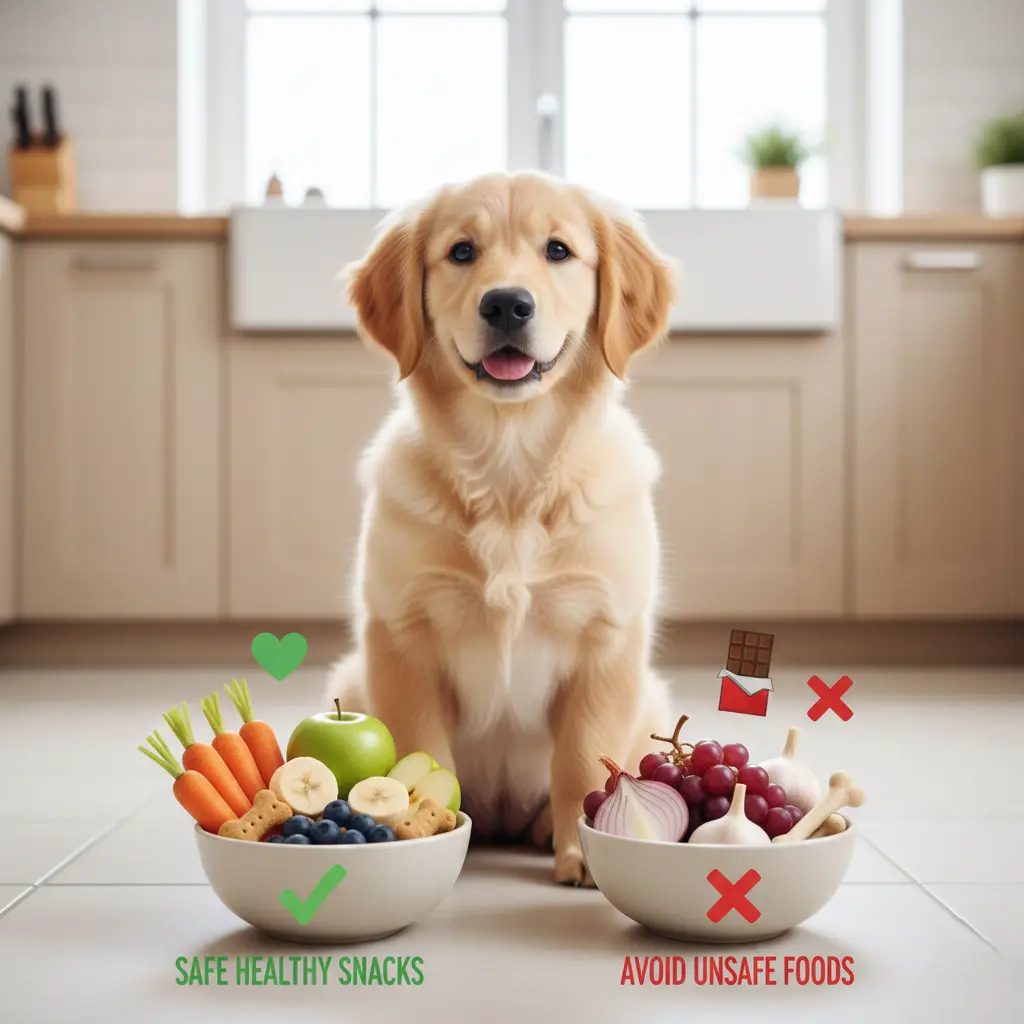
Safe fruits for puppies include:
- Blueberries – Great for antioxidants and brain development
- Bananas – Soft, sweet, and easy to digest
- Apples (peeled, no seeds) – Good for fiber and digestion
- Watermelon (seedless) – Hydrating and puppy-friendly
Always cut fruit into very small pieces to avoid choking.
Vegetables That Puppies Can Eat
Vegetables offer fiber, vitamins, and low-calorie nutrients. Safe vegetables include:
- Carrots (softened or shredded)
- Sweet potato (cooked)
- Green beans
- Peas
These natural puppy snacks support digestion and energy while being gentle on small stomachs.
High-Protein Puppy Snacks
Puppies need protein to build strong muscles and bones. Safe protein-based snacks include:
- Boiled chicken
- Boiled turkey
- Scrambled eggs (plain, no salt)
- Puppy-safe jerky (soft, natural ingredients)
Ensure the meat is fully cooked, unseasoned, and cut into tiny pieces.
Puppy Dental Chews
Some dental snacks are designed specifically for puppies. These help reduce plaque and build chewing strength, but choose puppy-formulated dental sticks, as adult versions can be too hard.
Homemade Snacks for Puppies
Frozen Banana Bites
Blend banana with a little puppy-safe plain yogurt and freeze in small molds. These treats are ideal for teething relief.
Mini Meatballs
Cook small meatballs made from ground chicken or turkey. They make great training snacks and are rich in protein.
Sweet Potato Chews (Soft Version)
Slice and lightly bake sweet potatoes until soft and chewy—perfect for small puppy teeth.
Homemade snacks give you full control over ingredients and freshness.
How Often Should Puppies Eat Snacks?
Snacks should make up no more than 10% of a puppy’s daily calories. Too many treats can lead to obesity or nutritional imbalance. Use treats mainly for training and positive reinforcement, not as meal replacements.
Snacks to Avoid for Puppies
Not all treats are safe. Some foods can be harmful or even toxic to puppies.
Toxic Foods to Avoid
Never give your puppy:
- Chocolate
- Grapes and raisins
- Onions and garlic
- Macadamia nuts
- Xylitol (found in sugar-free snacks)
These foods can cause severe health problems and must be completely avoided.
Hard Snacks or Bones
Avoid giving puppies:
- Hard bones
- Antlers
- Rawhide
- Hard biscuits
These can break puppy teeth or cause choking.
Spicy or Salty Snacks
Human snacks with spices, salt, or flavoring can irritate a puppy’s stomach and lead to dehydration or digestive issues.
Processed Treats With Additives
Avoid snacks containing:
- Artificial colors
- Chemical preservatives
- High salt and sugar
- Fillers like corn syrup
Puppies do best with natural, simple ingredients.
Signs a Snack Isn’t Suitable for Your Puppy
If your puppy shows any of these symptoms after eating a new snack, stop immediately:
- Vomiting
- Diarrhea
- Excessive scratching
- Swelling around the mouth
- Low energy or discomfort
Always introduce new snacks slowly to check for allergies or sensitivities.
Tips for Choosing the Best Puppy Snacks
Check the Ingredients
Choose snacks with natural ingredients, real meat, and minimal additives.
Look for Puppy-Specific Labels
Snacks formulated for puppies have the right texture and nutrition.
Consider Size and Softness
Treats should be small enough for tiny mouths and easy to chew.
Consult Your Vet
Your veterinarian can recommend snacks based on breed, age, and health needs.
Conclusion Safe Snacks for Happy, Healthy Puppies
Offering the right snacks for puppies is essential for their growth, training success, and overall well-being. By choosing soft, natural, and nutrient-rich treats—and avoiding harmful or hard-to-digest options—you ensure your puppy stays energized and healthy. Safe snacks support development, strengthen the bond between you and your pup, and set the foundation for a lifetime of good habits.